

By Valérie Orsoni — Biohacker & Longevity Expert
Valérie Orsoni is a biohacker, author of 56 books, and founder of biohacker.fr. She has been tracking her biology through N=1 self-experimentation protocols since 1998. She has completed a Stanford Genetics Longevity Research certificate a AI Longevity Researcher certificate , two Stanford Medicine certificate programs: Nutrition Science and GLP-1s & weight loss. She was named in the Top 50 Longevity Leaders by Life Spanning magazine and is currently the #1 on the Longevity Cup Women’s Leaderboard (chronological age -23 years).
Not sponsored: I was not paid to write this article. This is not sponsored content, and these are my honest opinions.
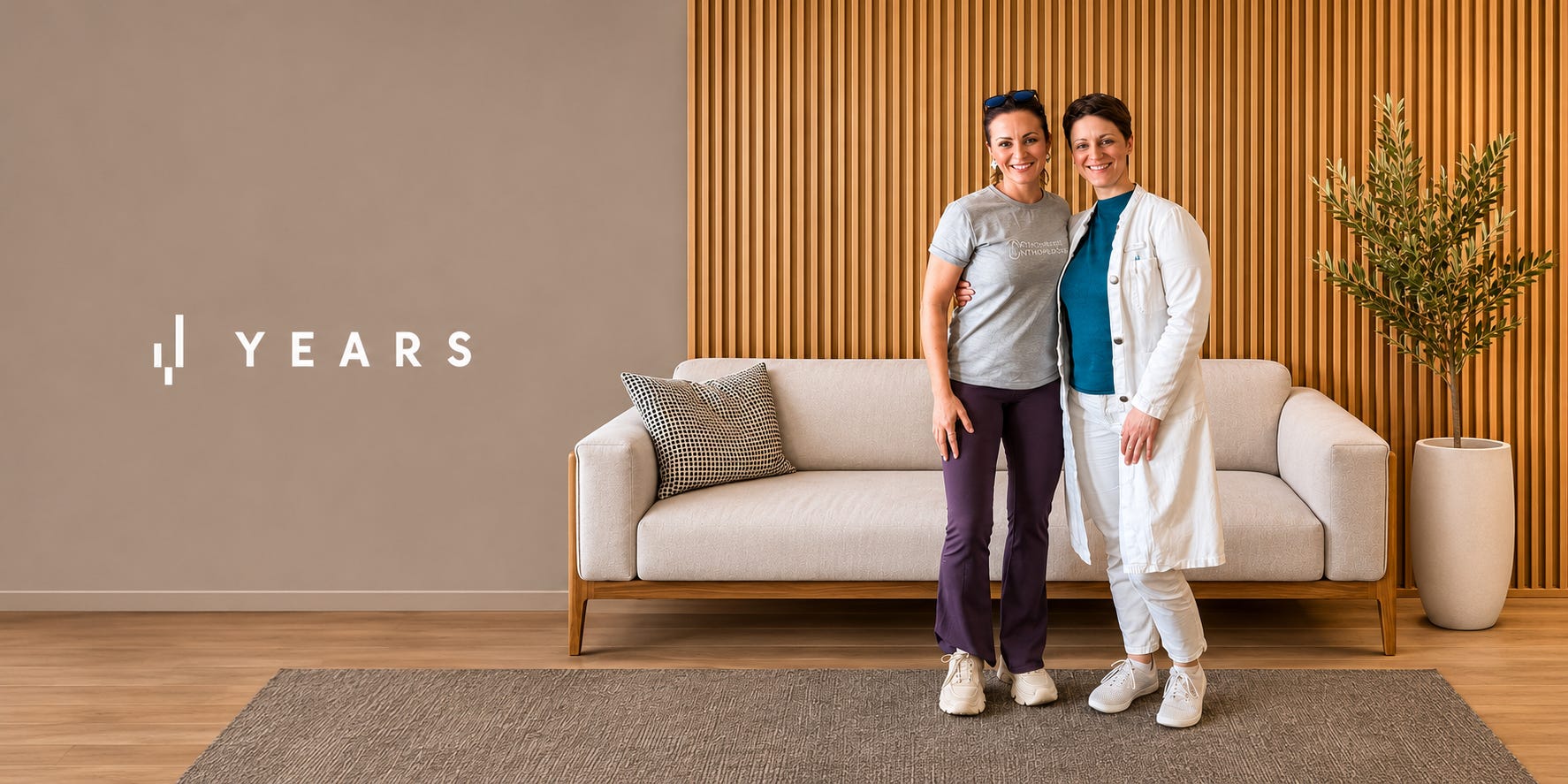
In August 2025, I spent a full day at YEARS, a physician-led longevity clinic on Kurfürstendamm in Berlin. I left with a 70-page report, a list of things to work on, and one promise to myself: come back and check whether my actions actually worked.

In May 2026, I was back in Berlin to speak at the Life Summit. And let’s be honest: how often am I in Berlin? So I contacted the YEARS team (Miguel is such an amazing person to work with…always quick to respond to all my questions and requests) and asked: “I’m in town, can I do it again? Isn’t it too early?” They said yes you can come back, and no it’s not too early.
That is why my second visit came nine months after the first one instead of twelve. Nine months turned out to be plenty of time for real change, and my body had a lot to say.
This is the part most people skip. Measuring yourself once is good. It is always better than nothing. But a single test is a snapshot. Measure, act, remeasure is what turns a snapshot into a trajectory, and a trajectory is what tells you whether your longevity strategy is working or whether you are just hoping.
So here is what a full day at YEARS looks like, what changed in my body between the two visits, what did not, and why I now tell everyone who will listen to do this once a year.
One day, head to toe
I have tested in a lot of clinics around the world. What I love about YEARS is that everything happens in one day, in one place, with state-of-the-art machines and a medical team that actually sits down and talks through the results with you.
No hotel stay, no week-long retreat.
Here is what we covered (and I had the same main doctor as last year, which made the experience even better, Dr. Ann Netzer is amazing!).
Lungs: whole-body plethysmography, spirometry, diffusion capacity (how well oxygen crosses into your blood), respiratory muscle strength, and exhaled nitric oxide for airway inflammation
Brain: brain MRI plus an online CNS cognitive test (attention, memory, reaction time, processing speed)
Whole-body MRI: radiation-free, from neck to pelvis
Heart: resting ECG, heart rate variability and respiratory sinus arrhythmia, cardiac ultrasound, and a cardiopulmonary exercise test with lactate (VO2 max)
Vessels: blood pressure on both arms and carotid ultrasound with intima-media thickness
Abdomen: ultrasound of the liver, gallbladder, pancreas, kidneys, spleen, aorta and bladder, plus liver elastography to check for fibrosis
Thyroid ultrasound
Blood and urine: hundreds of markers, including ApoB, Lp(a), NT-proBNP, hs-CRP, an oral glucose tolerance test, omega-3 index, vitamins, minerals, hormones, and new this year, proteomics
Fitness, bones, muscles: bone density, grip strength, jump power, balance, mobility, and a 3D body scan
Senses: vision (acuity, depth perception, color vision, visual field), AI-assisted retinal imaging, and hearing
Skin: full-body AI mole mapping for skin cancer screening
Yes, it is a long day.Thank god YEARS Clinic provides a yummy lunch and snacks (healthy of course), I you need them.
What improved (and what I did about it)
My lungs: the biggest win of the year
I have always been told I have “weak lungs.” So after the first visit I made them a project: about one hour of halotherapy a day, nasal rinses, gargling, and inspiratory muscle training with a resistance breathing device.
The result:
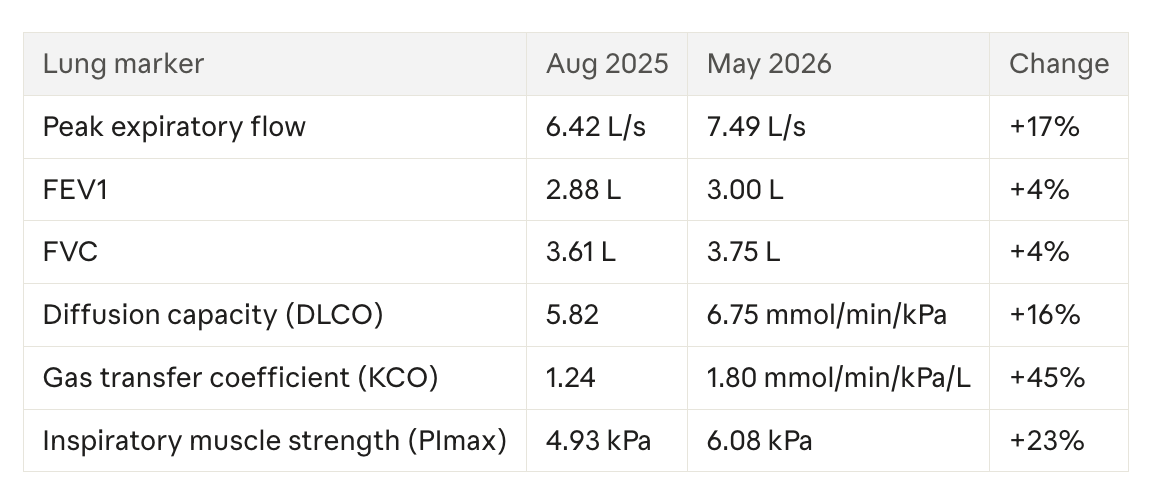
Here is the detailed report I got from YEARS.


The physician described it as a significant improvement across nearly all parameters. Lung function is one of the strongest predictors of how long and how well we live, and it is trainable. Remember that.
My nervous system: the HRV comeback
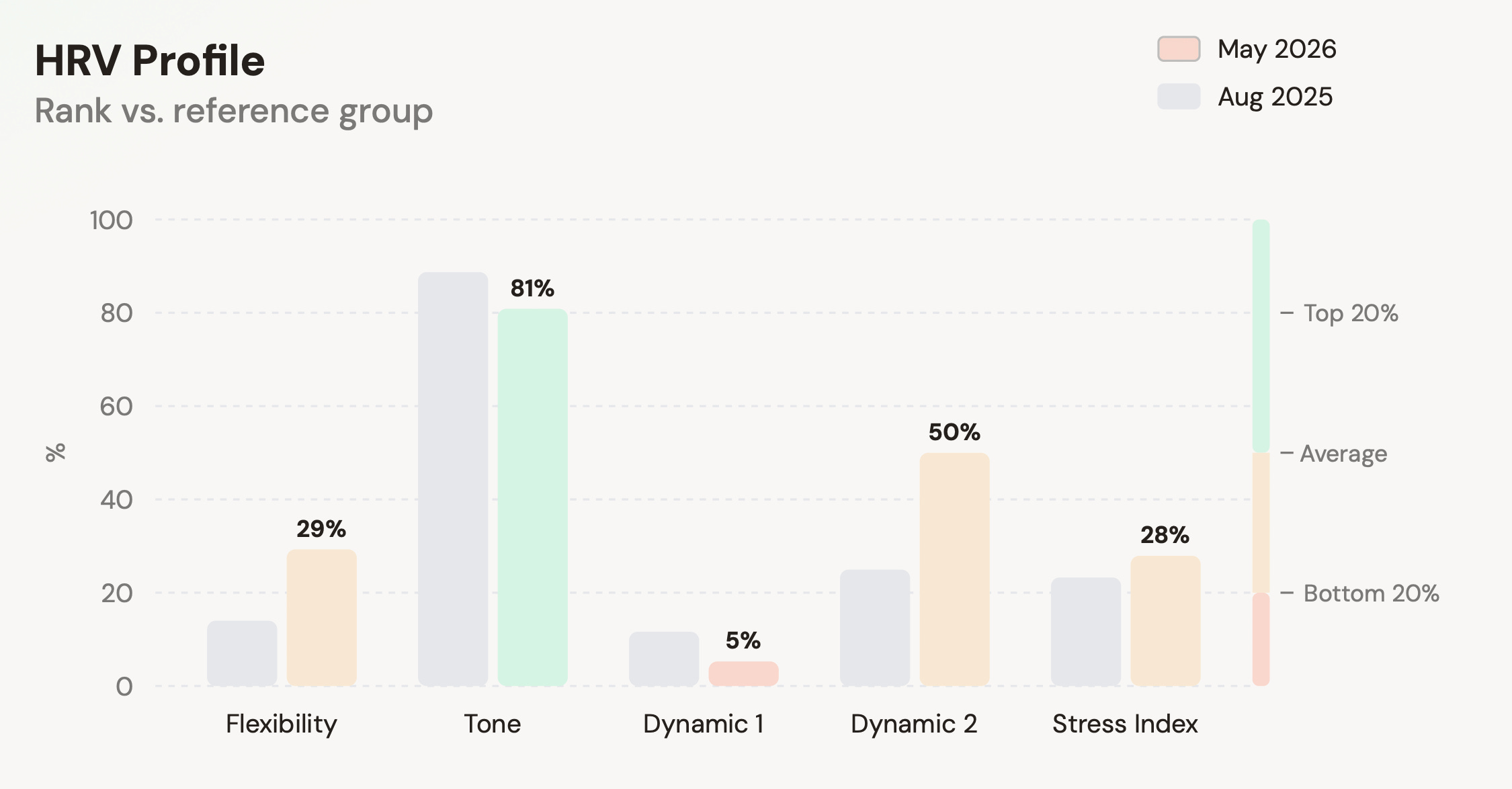
This is the one I am proudest of, because I worked hard for it. In 2025, my heart rate variability was significantly reduced, my stress index was elevated, and my parasympathetic system barely responded to deep breathing during the test.
So I made my vagus nerve a daily project: Pulsetto vagus nerve stimulation, HeartMath coherence training, and gargling (yes, gargling: the throat muscles it works are wired to the vagus nerve).
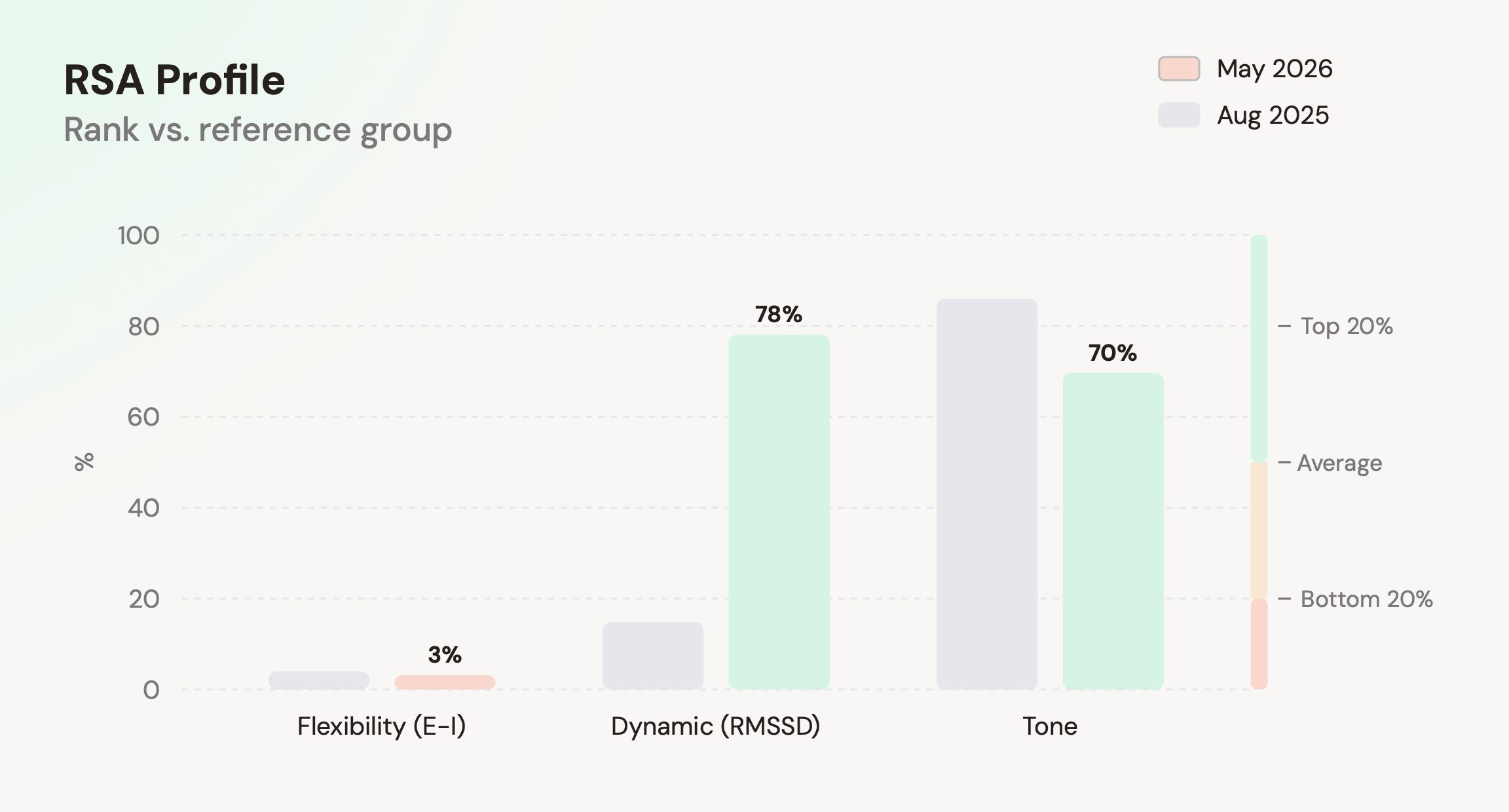
In 2026, the physician noted that my HRV and stress parameters had significantly improved, with better vagal activation and better regulatory capacity. On the respiratory sinus arrhythmia test, which shows how well the body shifts into recovery mode, my vagal dynamics (RMSSD) ranked in the 78th percentile and my vagal tone in the 70th percentile. I sleep better, I handle stress better, and I feel it every day.
Next target: autonomic flexibility, which still has room to grow.
My brain: fewer white matter spots every year
Nonspecific white matter lesions are tiny bright spots seen on brain MRI. They become more common as we age and are often linked to small vessel health. I have been tracking mine: 15 lesions in 2023, 11 in 2025, and 9 in 2026. Fewer spots, year after year. The 2023 count comes from a Prenuvo full-body MRI, and the 2025 and 2026 counts from my MRIs at YEARS.
From 15 Lesions to 9: How I Reversed “Irreversible” Brain Damage

By Valérie Orsoni — Biohacker & Longevity Expert
Different scanners can count slightly differently, so a specialized neuroradiologist is now comparing the 2023, 2025 and 2026 images side by side to measure each one precisely. This is the power of repeating a brain MRI: without a baseline, you can never see a trend like this one.
GIVE THE GIFT OF HEALTH to yourself or to a loved one

My eyes: the scare that went away
In 2025, the AI retinal scan flagged possible drusen and tiny vascular changes. That kind of note keeps you up at night. I doubled down on daylight (at least two hours a day), sleep, omega-3 and vitamin A.
In 2026, the retina was assessed as clean: no drusen, no signs of macular degeneration, diabetic retinopathy or glaucoma. Distance vision in my right eye went from 0.5 to 0.8, and with both eyes from 0.63 to 1.0. My depth perception was weaker this year, so that one goes on next year’s watch list.
My engine: stronger at the thresholds
On the bike test, my workload at the anaerobic threshold went from 100 to 137 watts, and my oxygen uptake at that threshold from 25.5 to 30.7 ml/kg/min. My max workload rose from 165 to 179 watts. In plain words: I can now go harder for longer before my body tips into lactate overload.
My 10-year cardiovascular risk is 1.1%, my cardiac ultrasound is normal and my carotid arteries are clean, with no plaque at all.
One honest caveat: my peak VO2 on the bike was slightly lower (37.2 to 35.3 ml/kg/min). The team considers this a protocol limitation of bike ergometry, and my wearable VO2 max climbed from about 30 to 40 in three months of Norwegian 4×4 intervals.

Next time, my VO2 max will be tested on a treadmill, for sure. But just in case, I am training more and more on my bike just to improve this number.
My jump power moved from the normal range into the top quarter for my age, and my grip strength stayed above the 75th percentile. Both are strongly linked to independence and survival as we age.

My nutrients: food beats pills
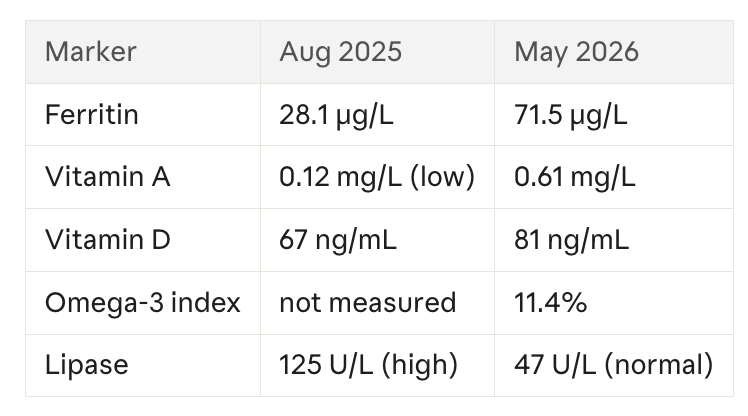
My ferritin more than doubled when I significantly increased my meat intake. And my omega-3 index of 11.4% (anything above 8% is considered protective) comes from eating sardines every day, not from capsules. My index responds better to the real food than it ever did to supplements.
My lipase, elevated last year, normalized after my physician and I adjusted my anti-inflammatory protocol (mainly reduced the colchicine levels).
What did not improve (yet)
This is the section I think matters most. Anyone can post their wins.
hs-CRP crept up from 1.6 to 1.8 mg/L. Still within the lab’s normal range, but above where I want it for longevity. We are still looking and have not found the root cause yet. We are investigating chronic sinus issues and Aspergillus, SIBO and gut pathogens. Just tested last week, and still at 1.5. I only managed to bring it super low once this year and it was 1 month later, after spending a month on my island, eating my food, surrounded by my people and zero pollution…
LDL and ApoB rose (LDL 124 to 129 mg/dL, ApoB 0.86 to 0.94 g/L). The context is reassuring: HDL at 104, triglycerides at 38, Lp(a) very low at 15 nmol/L, a favorable particle profile, and zero plaque on ultrasound. I am not panicking, but I am acting: since May, I have cut back on butter and red meat, gone back to my Corsican olive oil, and added more fish. Since red meat is what brought my ferritin back up, I am keeping a close eye on my iron so it does not slide back down.
HbA1c at 5.8%. The team considers this a probable artifact of long-lived red blood cells, given my good fasting glucose and insulin sensitivity (HOMA-IR 1.2). But my glucose tolerance test showed something useful: my blood sugar dropped to 44 mg/dL at two hours, a tendency to reactive hypoglycemia. The fix is simple: never eat carbohydrates alone, always pair them with protein or fat.
Body fat went from 22.7% to 25.1%. I came straight off a long trip. My home measurements were already back down within weeks, and my lean mass and visceral fat stayed in a good place.
And one finding to keep watching: a small amount of pelvic fluid seen again this year, which I am having checked by my gynecologist. This is exactly why full-body imaging is worth it. You want to know, and you want a baseline to compare against.
“I can’t afford it.” Really?
People tell me this all the time.
And then I watch them walk into a coffee shop every morning.
Let’s do the math together. A $6 to $10 drink a day is $180 to $300 a month. That is $2,200 to $3,600 a year spent on drinks outside your home, and we are not even counting alcohol.
Published pricing for YEARS programs starts at around €1,900 for the entry program, with the most comprehensive packages costing more (check years.co for current prices).

So the question is not really whether you can afford it.
The question is what you choose to spend on. If your health is truly a priority in your life, then you make the right choice. It is the same choice I made at 16 when I decided never to drink alcohol: it is not a sacrifice, it is an investment.
Make it a trip, or make it a gift
Berlin is one of my favorite cities in Europe. Book an extra day or two: the museums are extraordinary (Museum Island alone is worth the trip), the food scene is fantastic, and walking the city is the perfect way to recover after a day of being scanned, poked and pushed to your VO2 max.
And here is an idea I love: YEARS offers gift cards on their website. Think about it. Instead of another sweater or another gadget, you can give someone you love the gift of health: a full map of their body and a baseline for the rest of their life.
My verdict
I have tried many longevity clinics. For me, YEARS in Berlin is the best in the world: extremely professional, truly state-of-the-art equipment, and doctors who connect the dots and follow up with concrete actions. This year’s report did not just give me numbers. It told me what to keep doing, what to change, and what to retest.
My plan since May: bring my ApoB down with less butter and red meat, more Corsican olive oil and more fish. Keep the lung protocol and the training. Keep hunting the source of that CRP. Test my VO2 max on a treadmill. And come back.
So, who is coming with me to YEARS Berlin next year? You don’t have to come with me, of course. You can go on your own.
But I strongly encourage you to do it, and to do it again a year later.
That second visit is where the magic happens.
Valerie Orsoni
Biohacker since 1998 | Longevity Expert
University of Hartford Hall of Fame
Top 50 Longevity Leaders (by Lifespanning Magazine)
Explorer: Skied to the South Pole, Climbed 45 peaks over 16k ft
Instagram : Valerie Orsoni
My fave brands + super promo codes here ==> ValerieOrsoni.com
My made-in-the-usa, clean, no fillers supplement line ==> ZellNova
PRIVATE LONGEVITY COACHING : Go to ABOUT page on ValBiohacker.com
🎙 Younger — San Francisco (Jan. 11-12, 2027)
🎙 Biohackers World Conference — Miami (Jan. 16-17, 2027)
🎙 Biohackers World Conference — San Francisco (Mar 13-14, 2027)
🎙 Longevity Show — Istanbul, Turkey (April 3-5, 2027)
🎙 Pulse Congress — Liège, Belgium (May 20, 2027)
🎙 Biohackers World Conference — Chicago (May 8-9, 2027)
🎙 Life Summit — Berlin, Germany (May 20-21, 2027)
🎙 Corsica Longevity Week — Corsica (June 12-19, 2027)
🎙 Mongolia Exclusive 2-week Longevity Experience - Mongolia (July 10-26, 2027)
🎙 Biohackers World Conference — New York (Sept 18-19, 2027)
Disclaimer: This article shares my personal N=1 experience and results. It is not medical advice. Every protocol mentioned here was designed for me, with my physicians, based on my own data. It is individual and not transferable. Always talk to a qualified healthcare professional before changing your diet, training, supplements or medication.
Wonderful! Congratulations for your amazing results. Regularity is paying 🥳🎉