


By Valérie Orsoni — Biohacker & Longevity Expert
Valérie Orsoni is a biohacker, author of 56 books, and founder of biohacker.fr. She has been tracking her biology through N=1 self-experimentation protocols since 1998. She is recently completed her Stanford Genetics Longevity Research certification program and is currently enrolled in the Stanford Medicine nutrition science program. She was named in the Top 50 Longevity Leaders by Life Spanning magazine and is currently the #1 on the Longevity Cup Leaderboard (chronological age -23 years).
Want to move again? Ready to shake off the sedentary stretch? Good for you. But watch out for the mistakes that send you right back to square one.
You stopped moving. Not out of laziness:
a professional burnout that took over everything
perimenopause or menopause that upended your sleep, energy, and motivation
an illness
a schedule so packed that exercise ended up at the very bottom of the list
This happens to hyper-capable, hyper-busy women who managed everything, except that one slot for themselves.
And then one day, you decide to start again.
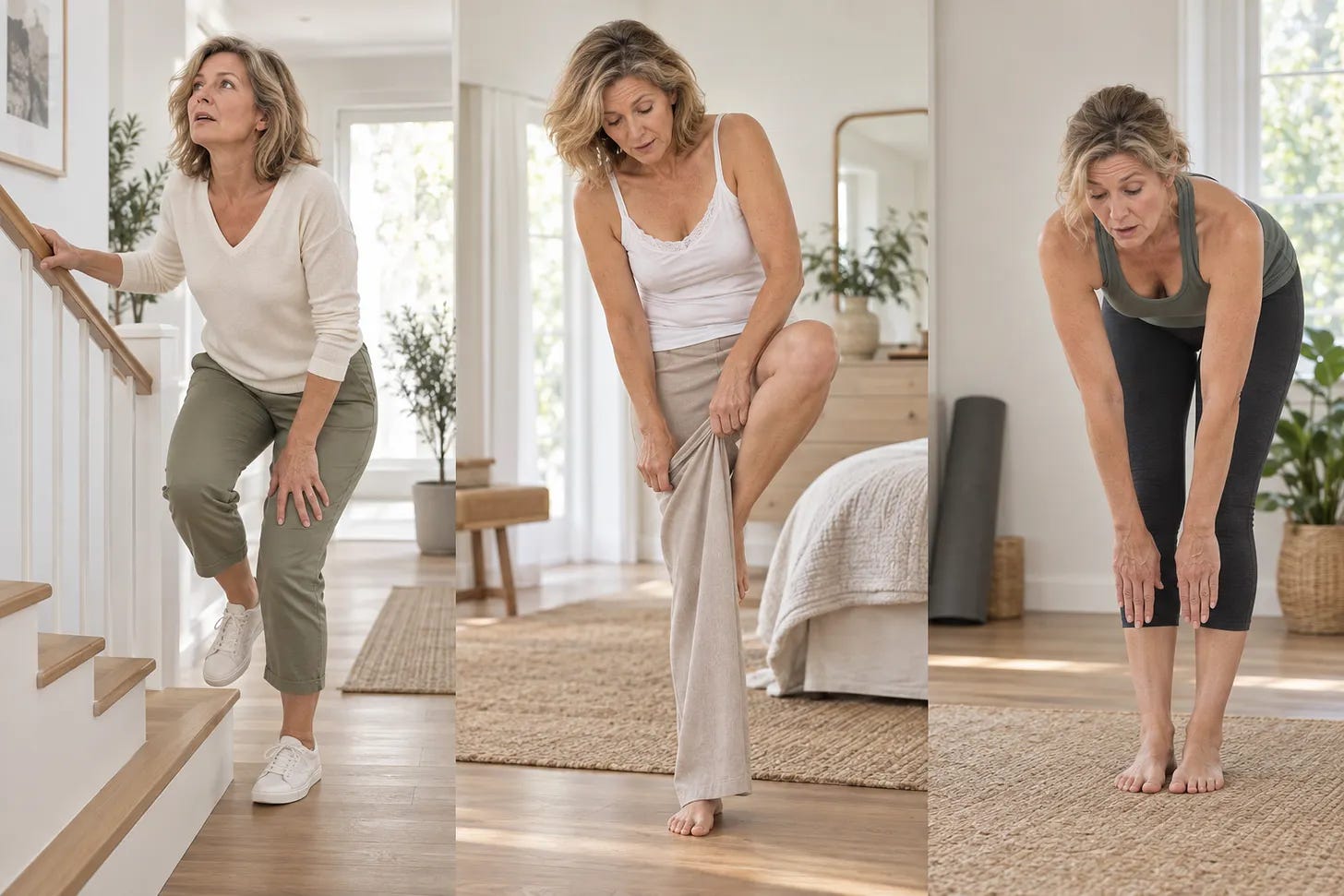
You climb a flight of stairs and your legs protest.
You lose your balance putting your pants on standing up.
You can’t touch your toes anymore.
Flexibility, balance, strength: it all quietly shrank while you were busy surviving something else.
This is exactly the moment most women get it wrong.
Not by staying inactive, but by restarting the wrong way.
Why your body doesn’t respond the way it used to
During perimenopause and menopause, the drop in estrogen accelerates bone loss: studies on the menopause transition show bone density decline speeding up sharply in the years around the final period, not gradually or in a straight line.
That same hormonal shift weakens muscle mass and changes how you recover from effort.
The good news: a recent clinical trial (STOP-EM, conducted in peri- and early post-menopausal women) shows that properly dosed strength and impact training protects both bone and muscle through this window.
The bad news: “properly dosed” is the part almost everyone skips.
Add months or years of inactivity on top of that, and balance (proprioception, your ability to sense where your body is in space) is the first thing to decline, often before you even notice it.
The result: you restart at the exact moment your body is least equipped to absorb a shock.
The 3 mistakes that sabotage the comeback
1. Too fast. You pick back up at your old pace, as if the months off changed nothing. Except your tendons, ligaments, and nervous system can’t keep up with that tempo anymore. This is the classic recipe for the sprain, the strain, or the tendinitis that benches you again three weeks later, usually more discouraged than when you started.

2. Too heavy. You come back with the loads or distances you used to handle. A deconditioned muscle hit with a pre-break load doesn’t “catch up” to its old level, it gets injured. In extreme cases, an intense, unaccustomed effort after a long break can trigger rhabdomyolysis (acute muscle breakdown): rare, but documented in people who jump back into intense exercise with no transition.

3. Too intense. You go straight into HIIT or a full-throttle group class, because “no time, might as well make it count.” Except during a hormonal transition, your recovery capacity is already stretched thin. Stacking a maximal training stress on top of that adds up as fatigue instead of building anything. The result: soreness that lasts a week, total burnout, and a reset back to zero.
The common thread in all three: they start from a good intention (”I want to get back to my old level fast”) and produce the opposite effect.
⚠️ This is not an argument against exercise. It’s the reverse: staying inactive is far more dangerous long-term for your bones, muscles, and metabolism than any gradual comeback. The problem is never the exercise, it’s the on-ramp.
The right method: think in stages
I’ve climbed more than 45 high-altitude summits and done polar expeditions. In the mountains, you never gain altitude all at once: you climb in stages, let your body acclimate, and that’s precisely what lets you go further, faster, safely, afterward. Getting back into exercise follows the exact same logic.
In practice:
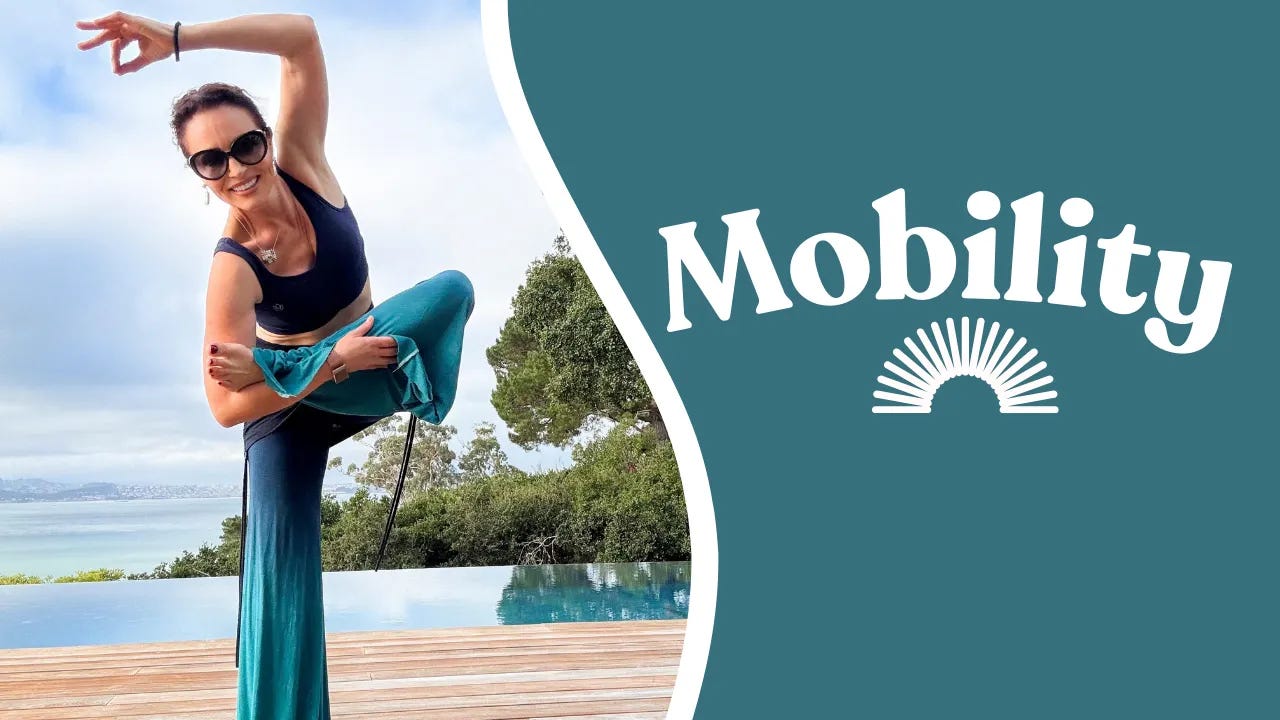
→ Start with mobility and balance before strength or cardio: these are the first capacities you lose, so they should be the first you rebuild.
→ Increase volume or intensity gradually, never both at once.
→ Aim for consistency (2 to 3 short sessions a week) rather than intensity in a single session: the body responds to regularity, not to heroics.
→ Soreness that clears in 48 hours is normal. Soreness that stops you from moving for a week is a sign you went too far, not proof that it worked.
How to actually ease back into a fitter life
You don’t need a comeback plan that looks impressive on day one, you need one that’s still running in six months. That means giving your body a real on-ramp instead of a cliff edge.
Start with two weeks of mobility and balance work alone, nothing else: ankle circles, single-leg stands while you brush your teeth, hip openers, a few minutes of stretching before bed. It looks too easy. That’s the point, you’re rebuilding the sensors before you rebuild the engine.
From there, add short strength sessions, bodyweight first (squats, wall push-ups, glute bridges), twice a week, with a full day of recovery in between. Only once that feels genuinely easy, not “I can push through it” easy, do you add load, distance, or intensity, and even then, change only one variable at a time.
Track how you recover, not just how you perform: if you’re bouncing back within a day or two, you’re in the right zone. If you’re wiped out for a week, you jumped a stage. There’s no prize for getting there fastest. The only version of this that works is the one you’re still doing a year from now.
If you recognized your own situation in this article, that’s probably where to start.
And remember….you can do it!
Valerie Orsoni
Biohacker since 1998 | Longevity Expert
University of Hartford Hall of Fame
Top 50 Longevity Leaders (by Lifespanning Magazine)
Explorer: Skied to the South Pole, Climbed 45 peaks over 16k ft
Instagram : Valerie Orsoni
My fave brands + super promo codes here ==> ValerieOrsoni.com
My made-in-the-usa, clean, no fillers supplement line ==> ZellNova
🎙 HealthSpan Summit — Los Angeles (2–4 oct. 2026)
🎙 Reclaiming Health & Longevity Symposium — El Salvador (8–9 nov. 2026)
🎙 Biohackers World Conference — Miami (Jan. 2027)
🎙 Biohackers World Conference — San Francisco (13-14 Mar 2027)
🎙 Biohackers World Conference — Chicago (8-9 May 2027)
🎙 Corsica Longevity Week — Corsica (12-19 June 2027)
🎙 Biohackers World Conference — Los Angeles (10-11 Jul 2027)
🎙 Biohackers World Conference — New York (18-19 Sept 2027)