


By Valérie Orsoni — Biohacker & Longevity Expert
Valérie Orsoni is a biohacker, author of 56 books, and founder of biohacker.fr. She has been tracking her biology through N=1 self-experimentation protocols since 1998. She is currently enrolled in Stanford Medicine’s longevity research certification program.
I’m writing to you from Paris. It’s 4 p.m. I pushed back every upcoming article to share this one urgently.
My hotel window looks out over a boulevard where the asphalt shimmers. The thermometer reads 39°C (102°F). Tonight it will stay at 25°C (77°F) minimum — which means my body won’t be able to drop below 37.5°C before 3 a.m., and my deep sleep will be nearly nonexistent.
Most people think they’ve handled the heat wave because they drank two liters of water and avoided running at noon. They’re wrong — and it’s not their fault. The official recommendations stop right where the biology keeps going. What I’m going to describe in this article are the mechanisms that extreme heat triggers deep inside you — in your mitochondria, your epigenome, your microbiome, your cardiovascular system, your blood sugar, and your HRV. Silent mechanisms. Mechanisms that age you.
And above all, I’m giving you a concrete plan to keep this heat wave from turning into silent accelerated aging — because extreme heat doesn’t just make you uncomfortable: it changes the expression of your genes.
1. Heat accelerates your biological age — this is no longer a theory
In 2025, a study published in Science Advances analyzed the impact of extreme heat on the biological age of older adults using an epigenetic clock — a tool that measures the true age of your cells via DNA methylation. The results are unequivocal: exposure to extreme temperatures produces deep, lasting alterations in that methylation, particularly in genes tied to inflammation, metabolism, immune function, and cellular repair.
What’s even more troubling: these changes persist after the heat wave. Your body “memorizes” the thermal stress in a way that can turn out to be counterproductive for future biological challenges. A study from the Harvard T.H. Chan School of Public Health, covering more than 900 adults, showed that people exposed to high temperatures over several months had blood cells that appeared biologically older than their chronological age.
To put things in perspective: an accelerated biological age is an early predictor of cancer, dementia, and diabetes. A heat wave isn’t just uncomfortable — it changes the expression of your genes.
2. Your mitochondria overheating — the engine that burns out
Extreme heat is a direct attack on the power plant of every cell in your body. At the cellular level, it induces massive oxidative stress, mitochondrial dysfunction, protein misfolding, and endoplasmic reticulum stress. The result: an overproduction of free radicals (the infamous ROS — reactive oxygen species) and a collapse in cellular energy production.
These imbalances don’t stay confined to the cell. They activate major inflammatory pathways — notably NF-κB and the NLRP3 inflammasome — and can trigger programmed cell death (apoptosis and pyroptosis). In parallel, vascular endothelial function is compromised: nitric oxide (NO) availability drops, vascular oxidative stress rises, and thrombosis risk climbs.
Bottom line: during a heat wave, every cell in your body is in survival mode, not performance or repair mode. It’s the exact opposite of what you’re trying to optimize as a biohacker.

What I personally use: Molecular hydrogen is one of the most targeted antioxidants in existence — it specifically neutralizes hydroxyl radicals, the most destructive ones, without interfering with the useful signaling ROS. During heat spikes, I increase my hydrogen water intake with my AxiomH2 device. This isn’t luxury biohacking — it’s applied biochemistry against a documented oxidative stress. I also take nitric oxide from N101. You can find my favorite products on valerieorsoni.com with great promo codes.
3. Your gut is on fire — and nobody’s talking about it
Heat weakens the intestinal barrier. Animal studies have shown that thermal stress significantly changes the composition of the microbiome: the genera Lactobacillus and Bacteroides — the allies of your metabolic and immune health — decrease, while pro-inflammatory strains like Clostridium increase.
But that’s not all. When the intestinal barrier weakens, lipopolysaccharides (LPS) — fragments of bacterial cell walls — pass into the bloodstream. This is what’s called endotoxemia. And that endotoxemia triggers low-grade systemic inflammation: unexplained fatigue, brain fog, heightened pain sensitivity, hormonal disruption. The kind of silent inflammation that, accumulated over years, builds the terrain for chronic disease.
The combination of heat wave + prolonged fasting + dehydration is particularly aggressive for the microbiome. If you practice intermittent fasting like I do (16:8), be careful to maintain robust electrolyte hydration during your fasting window, and don’t extend your restriction window during heat peaks. In fact, during a heat wave, my body naturally refuses to fast, and I start eating around 10 a.m. I listen to it.
4. The heart, the kidneys, the vessels — three organs under maximum pressure
When the temperature rises, your cardiovascular system triggers an emergency protocol: it redirects blood toward the skin to release heat by convection, which forces the heart to speed up. This is no small thing.
Each additional degree of extreme heat is associated with a 2.1% rise in cardiovascular mortality and a 4.1% rise in respiratory mortality.
The kidneys are on the front line: they struggle to conserve water, which creates chronic renal stress during long heat waves. Epidemiological studies link intense heat episodes to spikes in kidney failure. And the blood itself becomes concentrated: hematocrit rises, viscosity increases, thrombotic risk is real — especially if dehydration is poorly compensated.

What many people don’t realize: dehydration isn’t just a question of water volume. When you sweat, you lose sodium, potassium, magnesium, and calcium — electrolytes essential to nerve conduction, muscle contraction, and heart-rhythm regulation. Drinking plain water without remineralizing means diluting even further what’s left.
5. Your blood sugar goes haywire — even if you’re not diabetic
Here’s something my Stelo CGM (Dexcom) lets me observe directly: high-heat days generate glycemic instability that most people never detect because they don’t measure.
Two mechanisms clash and create a dangerous oscillation: on one side, thermal stress stimulates the production of cortisol and adrenaline — hormones that raise blood sugar. On the other, heat dilates the blood vessels and speeds up glucose absorption, which can cause reactive hypoglycemia. The result: spikes and crashes that exhaust the pancreas, promote inflammation, and degrade metabolic flexibility.
If you follow a ketogenic or low-carb protocol like I do, you’re partially protected: your glycemic regulation is more stable at baseline, and you produce ketone bodies that supply backup fuel to the brain in case of metabolic stress. But even in ketosis, monitoring stays useful. A heat wave is a test of your metabolic flexibility under real-world conditions.
6. Your sleep sabotages your HRV — and therefore your longevity
This is the vicious cycle of the nighttime heat wave. To enter deep sleep, your body has to lower its core temperature by about 1°C. When it’s 30°C in your bedroom, that process is blocked or severely slowed. No thermal descent = no deep sleep = no recovery.
The direct consequence: nighttime cortisol stays elevated, melatonin is reduced, and you wake up with a collapsed HRV. My Oura Ring and my WHOOP show it to me unambiguously: after every heat-wave night, my heart rate variability plunges by 15 to 25 points. And a chronically low HRV is a marker of accelerated aging, failing autonomic regulation, and systemic inflammation.
Sleep is when your body activates its cellular repair processes, its clearance of brain waste (the glymphatic system), its hormonal regulation. One night of bad sleep at 39°C does more biological damage than you’d imagine.
Heat-wave night protocol: bedroom below 22°C if possible (fan + lightly dampened sheets if you have no A/C), glycine 5g before bed to ease thermoregulation, magnesium bisglycinate for the parasympathetic nervous system, and if available, an extremity-cooling protocol (cold feet and hands help the body regulate its core temperature) — ice baths for the feet and hands, for example.
I add a Pulsetto session to support my HRV every day (code ORSONI for 10% off).

7. The epigenome that “memorizes” the heat wave
This is perhaps the most counterintuitive point — and the most important for anyone who thinks in terms of longevity.
Thermal stress doesn’t end when the heat wave ends. The heat-induced alterations to DNA methylation can persist long after temperatures return to normal. In the biology of aging, this is called “maladaptive epigenetic memory”: where short-duration stress builds resilience, chronic or extreme exposure creates a lasting biological imprint that the body struggles to erase.
This is the fundamental difference between controlled hormesis — like brief sauna exposure, at 80°C for 15–20 minutes in a prepared context — and heat that is endured, constant, uncompensated, at 40°C for days. The first makes you more robust. The second silently accelerates your biological clock.
That’s why intervention isn’t optional. A heat wave isn’t a parenthesis to “endure.” It’s an active biological stressor that leaves traces.
8. My biohacker protocol during a heat wave
Here’s what I put in place concretely, not theoretically:
Active hydration — not just water. Water + electrolytes (sodium, potassium, magnesium) every 90 minutes. I target 35–40 ml/kg/day during high heat, with special attention to sweat losses. I add hydrogen water (AxiomH2) in the morning on an empty stomach and mid-afternoon to counter the peak of thermal oxidative stress.
Real-time biological monitoring. My Stelo CGM lets me observe heat’s real impact on my blood sugar, hour by hour. My Oura Ring and my WHOOP give me my HRV, my basal temperature, and my sleep quality. This data doesn’t lie — and it tells me when my body is in recovery vs. in a stressed state.
Anti-heat-wave supplement stack:
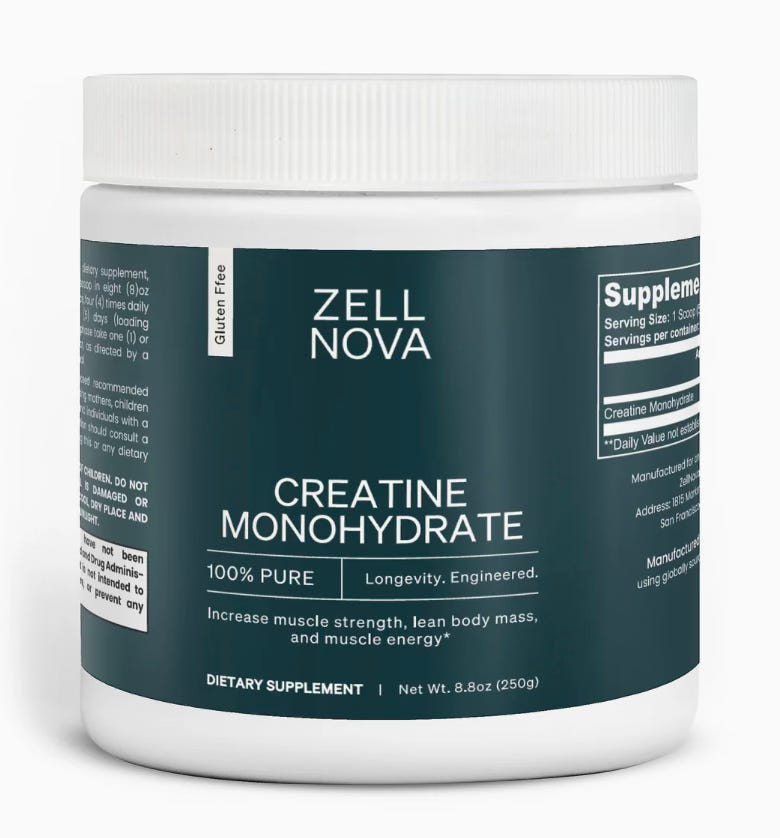
Creatine (10g/day, 5g of it for brain function): neuroprotective in situations of thermal stress, also supports muscular thermoregulation
CoQ10 (400mg, ubiquinol form): direct mitochondrial support, particularly important when the mitochondria are under oxidative stress
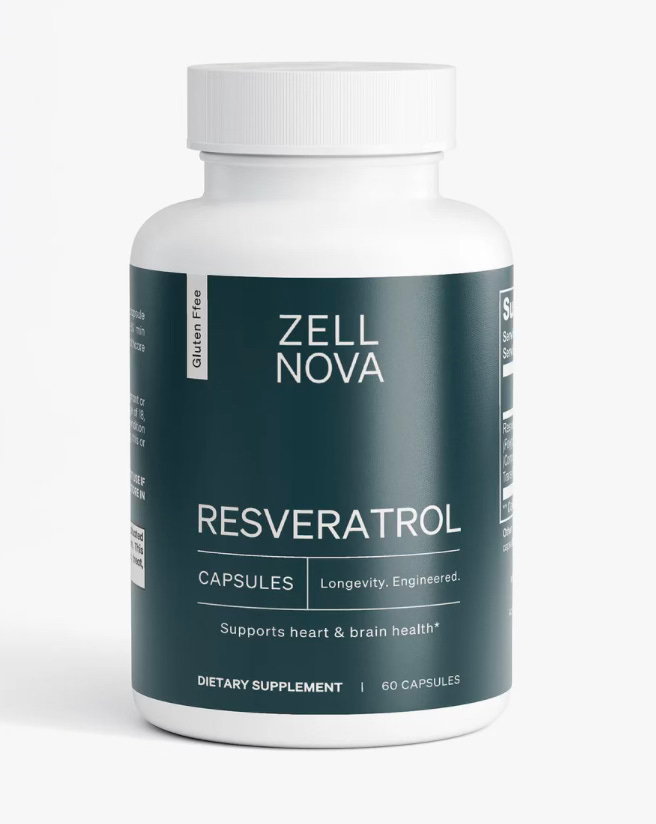
Resveratrol (600mg): sirtuin activation in the face of thermal stress, systemic antioxidant
Magnesium bisglycinate (400mg in the evening): nervous-system relaxation, sleep preparation
Liposomal vitamin C (2g): antioxidant cofactor, vascular support


Training windows. Zero intense activity between 11 a.m. and 6 p.m. My strength or high-intensity cardio sessions get moved to 7 a.m. or after 7 p.m. Heat adds a thermal stress on top of the metabolic stress of exertion — the combination massively increases allostatic load. I keep gym sessions if the gym is air-conditioned.
Sleep: an active battle. The coolest bedroom possible. Glycine 5g + magnesium before bed. Reduced light exposure starting at 8 p.m. so as not to disturb melatonin further.
If your HRV is in free fall several mornings in a row, that’s a signal: reduce the intensity of your workouts, increase protein (especially the repair amino acids), and prioritize the restorative over the performance.
For peptide users: BPC-157 and TB-500 are especially relevant during a heat wave for their role in cellular repair and the modulation of systemic inflammation. If you use peptides, this is a period where protocol continuity takes on its full meaning. I get mine from two very clean US suppliers (available on valerieorsoni.com).
The heat wave as a test of your biology
Biohackers have an advantage that 99% of people don’t have: they measure. They observe. They adapt.
This heat wave isn’t just a weather constraint to endure.
It’s a real, documented biological stressor that temporarily — and, if you don’t respond, lastingly — changes your epigenome, your microbiome, your mitochondria, and your cardiovascular system.
The good news: the tools exist. The knowledge exists. And you, reading valbiohacker.com, have access to both.
Hydrate intelligently. Measure what’s happening in your body. Protect your sleep like a precious asset. And remember that every heat-wave day where you actively intervene is a day you get ahead of the aging that others are accumulating without even knowing it.
Forza!
Let’s keep going! Forza!
Valérie Orsoni
Biohacker since 1998 | Longevity Expert
Instagram : Valerie Orsoni
My fave brands + super promo codes here ==> ValerieOrsoni.com
My made-in-the-usa, clean, no fillers supplement line ==> ZellNova
🎙 Life Summit— Berlin (29-30 mai 2026)
🎙 Corsica Biohacking — Corsica (6-13 juin 2026)
🎙 Biohackers World Conference — New York (juin 2026)
🎙 RAADFest— Sedona (4-6 septembre 2026)
🎙 HealthSpan Summit — Los Angeles (2–4 oct. 2026)
🎙 Reclaiming Health & Longevity Symposium — El Salvador (8–9 nov. 2026)
This is great! Some new info to me. Thank you!
I did know about blood sugar as my CGM used to spike after the sauna. And last week I was at an outdoor event and my Oura said I’d experienced 3 hours of stress. I felt it! This is fascinating.
Your post was very interesting, but I am wondering how this fits into all the literature that says high heat sauna contributes to longevity.