

By Valérie Orsoni — Biohacker & Longevity Expert
Valérie Orsoni is a biohacker, author of 56 books, and founder of biohacker.fr. She has been tracking her biology through N=1 self-experimentation protocols since 1998. She is currently enrolled in Stanford Medicine’s longevity research certification program.
What Is It, Exactly?
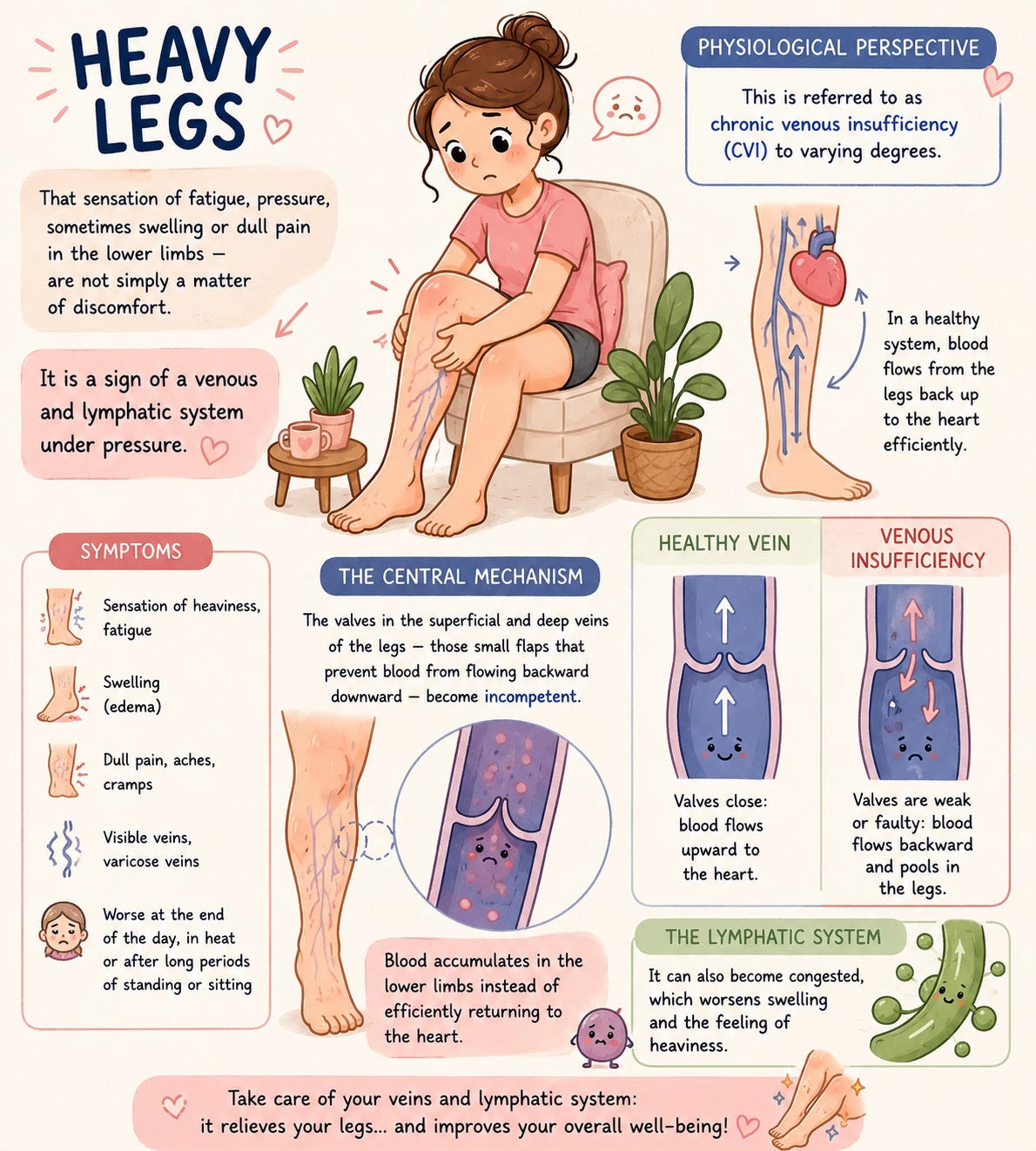
Heavy legs — that sensation of fatigue, pressure, sometimes swelling or a dull ache in the lower limbs — is not simply a matter of discomfort.
It is the signal of a venous and lymphatic system under strain.
Physiologically, we are talking about chronic venous insufficiency (CVI) at varying degrees of severity.
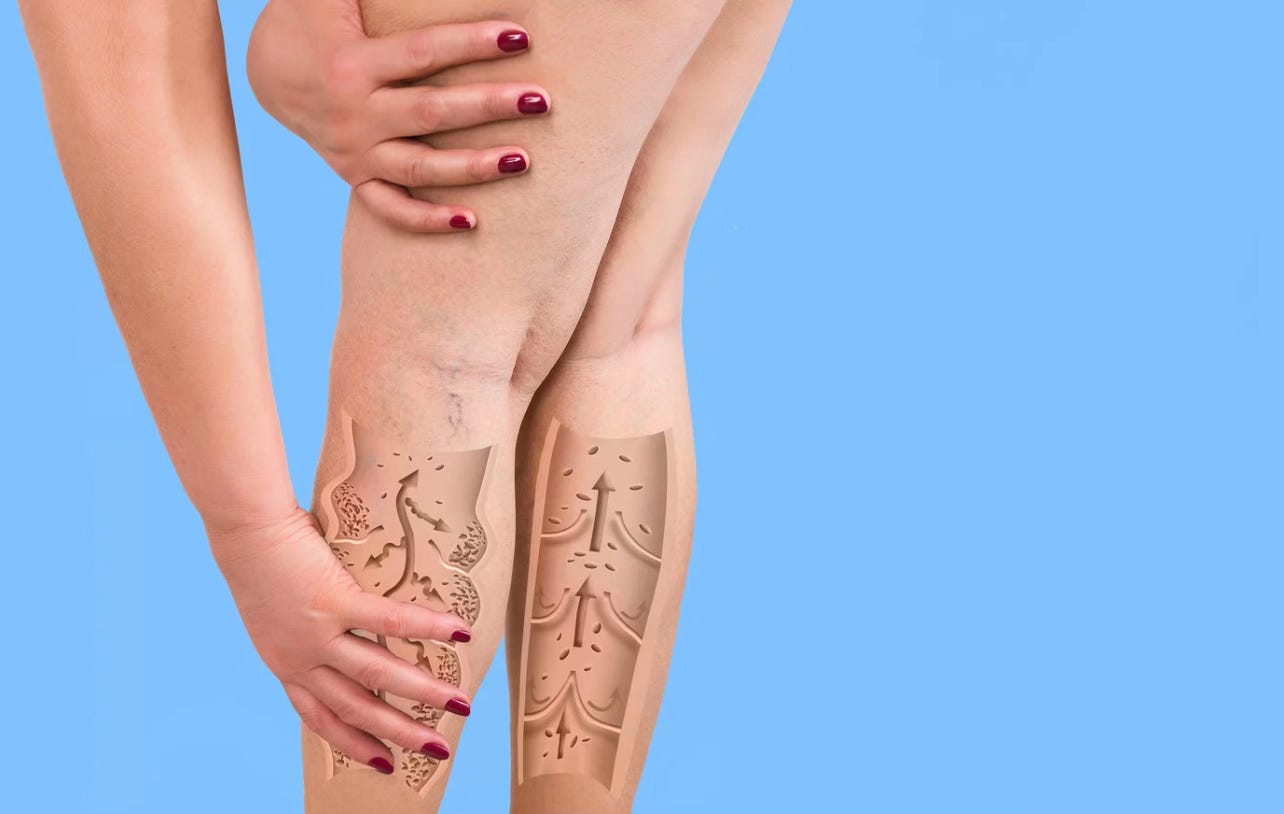
The central mechanism: the valves in the superficial and deep veins of the legs — those small flaps that prevent blood from flowing back downward — become incompetent. Blood pools in the lower limbs instead of efficiently returning to the heart. The result is increased hydrostatic pressure in the capillaries, fluid leakage into interstitial tissue, local inflammatory activation, and relative tissue hypoxia.
Over time: varicose veins, edema, hyperpigmentation, and in severe cases, venous ulcers.
Venous stasis also creates fertile ground for the activation of NF-κB and the NLRP3 pathway — those who have been following me for a while will recognize these players in chronic low-grade inflammation.
Heavy legs are therefore not an isolated condition: they are part of the broader picture of systemic inflammation.
Let’s move on to my plan for addressing this highly disruptive phenomenon.